
Free: (801) 836-4112
nickmdj@yahoo.com
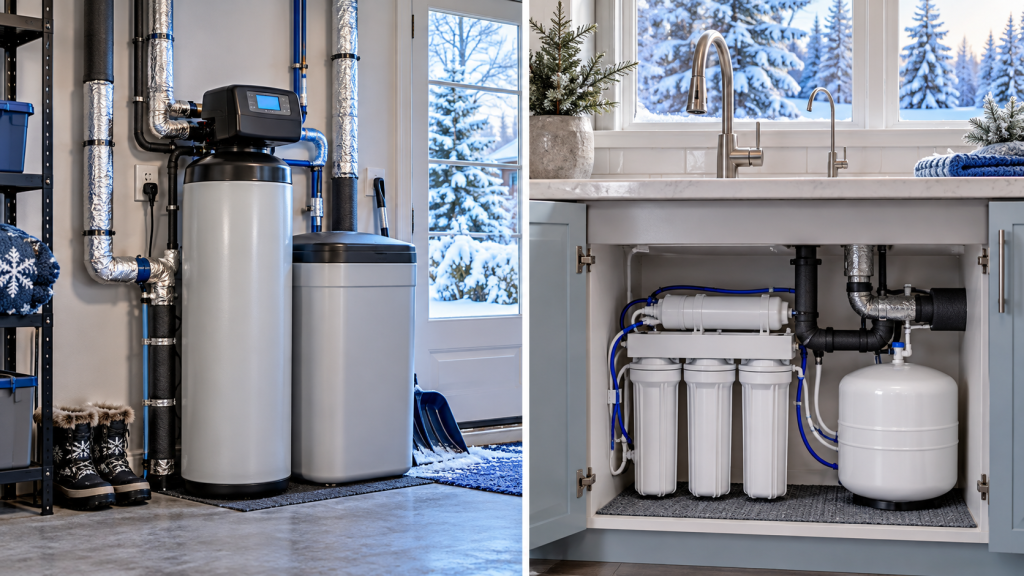
Utah winters are beautiful, but they are hard on anything that holds water. Cold snaps along the Wasatch Front and deep freezes over Park City and Heber City can keep temperatures below freezing for days. If your softener or reverse osmosis system sits in a garage, crawl space, or unheated utility room, one cold night can mean cracked valves, split tubing, and a repair bill. Here is how to prevent water softener freezing in winter and keep your RO system healthy until spring.
Water expands when it freezes. That can crack a softener’s control valve, bypass valve, or resin tank, and frozen water in the brine tank keeps brine from forming. RO systems are even more delicate: freezing can crack filter housings, damage the membrane, and split fittings, leaving a slow leak after the thaw. Equipment is most at risk in garages, uninsulated basements and crawl spaces, utility rooms on outside walls, outdoor installations, and cabins that sit empty.
Many homes in Lehi, Eagle Mountain, and Herriman have softeners in the garage near the main line. That spot is convenient but can get cold.
Under-sink RO systems are usually warm enough unless the sink is on an exterior wall or the unit is in a basement or garage. Open cabinet doors on very cold nights, insulate cold walls behind sinks, watch ice maker tubing in cold floors, and use the RO faucet regularly. Slower tank filling in winter is normal.
If your home or cabin will sit empty, keep the heat at a safe minimum. If you shut off the water, ask a professional how to bypass and drain your softener and RO system so the resin and membrane are protected.
If your system freezes: put the softener in bypass or shut off the RO supply, let the area warm slowly with no open flame, check for cracks and leaks once thawed, return it to service slowly, and call a professional if you see damage or it will not regenerate. Cracked valves and housings usually need replacement.
At what temperature can a water softener freeze?
Water freezes at 32 degrees Fahrenheit, and a drafty garage can be colder near walls and floors than the forecast suggests.
Can I move my water softener out of the garage?
Sometimes, depending on where the main line enters and where a drain is available. A technician can advise you.
Will a frozen RO membrane still work?
It may run but not filter properly. Having it checked, and replaced if needed, is the safest option.
Expert Water Systems has served Utah homeowners for more than 24 years, handles about 400 systems a year, and provides softener and RO repair across Utah County, Salt Lake County, Davis County, Park City, and Heber City. If winter has done damage, we can usually complete a replacement in one day at about half of what big national companies charge. Call (801) 836-4112 for free, no-pressure advice.